What Is Industrial Metal Fabrication and Why Does It Matter in Modern Manufacturing
Industrial metal fabrication is the process of designing, cutting, forming, machining, welding, and assembling metal components used in large-scale manufacturing and industrial operations. These components are built to perform reliably in demanding environments, including power distribution, material handling, energy systems, mining, furnaces, and heavy equipment manufacturing.

Understanding Industrial Metal Fabrication
At its core, industrial metal fabrication transforms raw metal materials into functional industrial components through a combination of advanced manufacturing processes, including:
Cutting (laser, plasma, or waterjet)
Forming and bending
CNC machining
Welding and assembly
Surface finishing and industrial coating
Commonly used materials include mild steel, stainless steel, aluminum, copper, brass, and specialty alloys. Each material is selected based on strength requirements, environmental exposure, electrical performance, corrosion resistance, and operational lifespan.
What distinguishes industrial metal fabrication is its ability to deliver both standardized and custom-fabricated components at an industrial scale, ensuring each part meets the exact demands of its application.
Why Industrial Metal Fabrication Matters in Modern Manufacturing
1. Precision for Complex Industrial Applications
Modern manufacturing requires components with tight tolerances and consistent quality. Industrial metal fabrication enables the precise production of parts used in critical systems where safety, performance, and compliance are non-negotiable.
Advanced CNC-controlled equipment ensures repeatability and accuracy, making industrial fabrication suitable for prototypes, low-volume production, and large manufacturing runs.
2. Flexibility in Design and Production
Industrial systems are rarely one-size-fits-all. Industrial metal fabrication allows manufacturers to adapt designs to fit unique equipment layouts, structural requirements, and operational constraints.
This flexibility is essential in sectors such as power transmission, industrial automation, and material handling, where every project presents distinct engineering challenges.
3. Improved Strength and Durability
Components produced through industrial metal fabrication are engineered to withstand real-world operating conditions. Factors such as load capacity, vibration, heat exposure, and environmental stress are addressed during both design and fabrication.
The result is stronger, longer-lasting components that reduce equipment failure, downtime, and long-term maintenance costs.
4. Efficient Problem Solving in Manufacturing
When standard parts fail to meet performance needs, industrial fabrication provides a solution-driven approach. Engineers can modify materials, fabrication techniques, or structural designs to resolve issues without compromising functionality.
This adaptability is critical in modern manufacturing environments where innovation, speed, and reliability drive competitiveness.
5. Support for Specialized Industrial Sectors
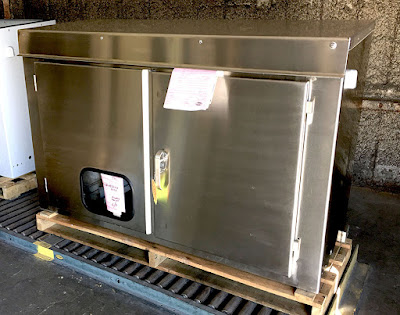
Industries such as electrical power distribution, furnaces and kilns, mining, and heavy equipment manufacturing rely heavily on industrial metal fabrication. Components like electrical enclosures, structural frames, tunnel kiln cars, and heavy-duty wheel assemblies often require application-specific fabrication.
Industrial fabrication ensures these components are built to meet exact operational and safety demands.
The Role of Technology in Industrial Metal Fabrication
Advancements in fabrication technology have significantly expanded what modern manufacturers can achieve. CNC machining, automated welding systems, and digital design tools allow for greater precision, improved consistency, and more efficient production timelines. These technologies help manufacturers meet increasingly complex design requirements while maintaining repeatable quality across production runs.
Integrated quality control processes further strengthen industrial metal fabrication by ensuring components meet industry standards and project specifications before delivery. Continuous inspection and process monitoring reduce errors, improve reliability, and support consistent performance in demanding industrial applications.
Industrial Metal Fabrication vs. Standard Manufacturing
Standard manufacturing is typically centered on producing large volumes of identical components. In contrast, industrial metal fabrication prioritizes adaptability, precision, and performance to meet specific operational requirements. This approach is particularly important in environments where components must withstand high loads, extreme temperatures, or continuous operation.
For manufacturers operating in complex or high-stress conditions, industrial fabrication provides the flexibility needed to address unique engineering challenges while maintaining safety and durability.
Final Thoughts
Industrial metal fabrication plays a critical role in modern manufacturing by enabling precision-engineered solutions tailored to real-world industrial demands. Its ability to balance accuracy, durability, and adaptability supports innovation across a wide range of sectors.
As manufacturing requirements continue to evolve, industrial metal fabrication remains an essential link between design intent and reliable, high-performance metal components, an approach demonstrated through the long-standing fabrication expertise of Rockett Inc.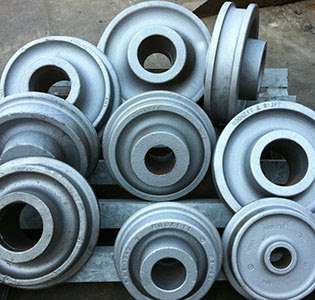

Comments
Post a Comment