How Material Selection Affects Custom Machining Performance
Material selection is one of the most important decisions in any custom machining project. The material chosen for a component affects much more than its final strength. It can influence machining speed, tool wear, dimensional accuracy, surface finish, heat management, production time, and the long-term performance of the finished part.

Custom machining is often used when standard components cannot meet a project's dimensional, structural, or performance requirements. Modern CNC machining allows manufacturers to produce highly specific parts from different material types, but the machining process must be matched to the material.
Why Material Selection Matters in Custom Machining
Every material responds differently to cutting, drilling, turning, milling, and other machining operations. Some materials are relatively easy to machine, while others require specialized tooling, slower cutting speeds, additional cooling, or carefully controlled processes.
The material can affect several important aspects of production, including:
Machining speed
Cutting tool selection
Tool life
Heat generation
Dimensional stability
Surface finish
Production time
Part strength
Wear resistance
Overall manufacturing cost
Selecting a material simply because it is strong or readily available may not always be the best approach. The material must also be suitable for the machining process and the environment in which the finished component will operate.
Steel for Strength and Industrial Durability
Steel is widely used for custom-machined industrial components because it offers a strong combination of strength, durability, availability, and versatility.
Different grades of steel have different properties, so engineers must consider the specific requirements of the application. A component exposed to heavy loads may require a material with high tensile strength and wear resistance. Another component may require a balance between machinability and structural performance.
Steel is commonly selected for components such as shafts, hubs, rollers, machine parts, wheel components, and heavy-duty material handling equipment.
However, steel can generate significant heat during machining, depending on its grade and the cutting operation. Proper tooling and machining parameters are therefore important for maintaining accuracy and protecting cutting tools.
Stainless Steel Requires Careful Machining
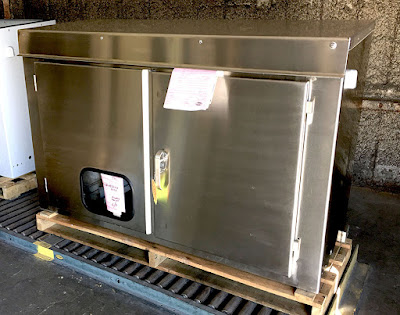
Stainless steel is valued for its corrosion resistance, strength, and ability to withstand demanding environments. It can be an excellent choice for components exposed to moisture, chemicals, or corrosive conditions.
At the same time, stainless steel can be more challenging to machine than many conventional steels. Certain stainless grades can generate heat and work-harden during machining. If cutting conditions are not properly controlled, excessive heat or tool wear can affect production efficiency and part quality.
For this reason, machining stainless steel requires careful attention to tooling, cutting parameters, coolant, and chip control.
The additional machining considerations are often worthwhile when corrosion resistance and long-term service performance are essential.
Aluminum Offers Lightweight Performance
Aluminum is another common material for custom machining. Its low weight and favorable strength-to-weight ratio make it useful when reducing component weight is important.
Aluminum is generally easier to machine than many harder metals, allowing manufacturers to achieve efficient material removal and good surface finishes. It is used in a variety of industrial components where weight, corrosion resistance, or ease of fabrication are important considerations.
However, aluminum alloys do not all behave the same way during machining. The selected alloy can affect cutting performance, surface quality, and the final mechanical properties of the component.
Choosing the appropriate aluminum grade should therefore be based on the component's actual operating requirements rather than weight alone.
Castings and Forgings Have Unique Characteristics
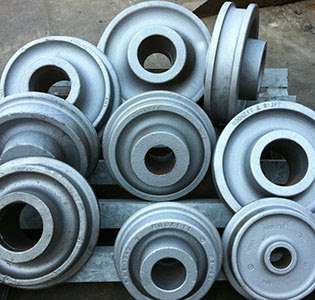
Custom machining frequently involves starting with a casting, forging, or round bar and machining it to its final dimensions.
Forged components can provide desirable mechanical properties for applications involving heavy loads and repeated stress. Castings, meanwhile, can allow manufacturers to produce complex shapes that may be difficult or inefficient to create entirely through machining.
The condition and geometry of the starting material affect the machining strategy. Internal features, hard spots, varying material thicknesses, and other characteristics may influence tool selection and machining parameters.
Understanding the starting material allows the machining process to be planned more effectively and can help reduce unnecessary material removal.
Material Hardness Affects Tool Life
Hardness is an important consideration when selecting a material for machining. Harder materials can provide excellent wear resistance in service, but they can also increase demands on cutting tools during production.
If a material is too hard for the selected machining method, tool wear may increase, and production efficiency may decline. Excessive tool wear can also affect dimensional consistency and surface finish.
On the other hand, a softer material may be easier to machine but might not provide the durability required for the finished component.
This is why material selection must balance machinability during production with performance during operation.
Heat Management Is Another Important Factor
Machining generates heat through friction and material removal. Different metals conduct and retain heat differently, which can affect both the cutting tool and the workpiece.
Excessive heat may contribute to:
Tool degradation
Dimensional changes
Poor surface finish
Material deformation
Reduced production efficiency
Coolant and lubrication strategies can help control heat, but material selection remains an important part of the equation.
When engineers understand how a material reacts to machining heat, they can select suitable cutting conditions and manufacturing methods.
Material Selection Can Affect Dimensional Accuracy
Precision is often a major requirement for custom-machined components. Parts may need to fit with bearings, shafts, gears, wheels, housings, or other components with limited allowable variation.
Material behavior can influence the ability to maintain these dimensions throughout the machining process.
Thermal expansion, hardness, internal stresses, and material stability can all play a role. Selecting a suitable material and controlling the machining process helps manufacturers maintain dimensional consistency from one part to the next.
For high-precision applications, these considerations become especially important.
Surface Finish Depends on the Material and Process
A component's surface finish can affect appearance, friction, wear, sealing, and interaction with mating components.
Material properties influence how a surface responds to cutting tools. The same machining operation may produce different results when performed on different alloys.
Tool condition, cutting speed, feed rate, depth of cut, and coolant also influence the finished surface. A well-planned machining process considers these variables together rather than treating material selection as an isolated decision.
Material Selection Can Influence Manufacturing Costs
The initial cost of raw material is only one part of the total manufacturing cost.
A less expensive material may require slower machining, more frequent tool changes, additional finishing, or more complex handling. In some applications, these factors can make the supposedly cheaper material more expensive to process.
A higher-cost material may provide better durability, improved machinability, or longer service life, resulting in better overall value.
For industrial buyers, the right question is often not simply, "Which material costs less?" Instead, it is, "Which material provides the best balance of manufacturing efficiency, performance, and lifecycle value?"
Matching Material to the Application
The best material is ultimately determined by the environment and job requirements of the finished component.
Before selecting a material, manufacturers and engineers should consider:
Load requirements: How much weight or force will the component experience?
Wear: Will the part experience friction, impact, or repeated movement?
Corrosion: Will it be exposed to moisture, chemicals, or outdoor conditions?
Temperature: Will the component operate in high or changing temperatures?
Machinability: Can the material be efficiently processed using the available equipment?
Dimensional requirements: How precise does the finished component need to be?
Service life: How long is the component expected to operate?
Budget: Does the material provide acceptable lifecycle value?
Considering these factors before production begins can help avoid costly changes later.
The Importance of Engineering and Machining Expertise
Material selection and machining should not be treated as separate decisions. Engineers and machinists can work together to determine how the selected material will behave during production and whether the proposed machining strategy is appropriate.
Custom machining operations may involve precision CNC turning, milling, keyway cutting, and other processes depending on the component design. Modern machining centers can also accommodate complex geometries and specialized production requirements.
Starting with accurate drawings and specifications also helps ensure that the material, machining process, tolerances, and finished component requirements remain aligned throughout production.
Making Better Material Decisions
The right material can make a significant difference in custom machining performance. It affects how efficiently a component can be produced and how well that component performs after installation.
Steel may be the right choice when strength and durability are priorities. Stainless steel may be more appropriate where corrosion resistance is essential. Aluminum can provide weight savings and efficient machining for suitable applications. Castings and forgings may offer advantages for specialized heavy-duty components.
There is no single material that works for every industrial application. The most effective approach is to evaluate the complete manufacturing and operating requirements before production begins.
When material selection is combined with proper engineering, precision machining, quality control, and appropriate finishing processes, manufacturers can produce components that deliver dependable performance and long-term value.
If your next industrial project requires precision custom machining and engineering support, Rockett Inc. can help develop high-quality machined components based on your drawings, specifications, and application requirements. Located in Flowood, Mississippi, the manufacturer provides custom machining capabilities for demanding industrial applications.

Comments
Post a Comment