How Custom Metal Fabrication Helps Ceramic Manufacturers Improve Equipment Reliability
Ceramic manufacturing depends on equipment that can operate consistently under demanding conditions. Production facilities often deal with high temperatures, heavy loads, continuous material movement, vibration, and extended operating cycles. When a critical component fails, the resulting downtime can affect production schedules, maintenance costs, product quality, and overall plant efficiency.

From kiln cars and wheel assemblies to structural components and material handling equipment, properly engineered fabricated products can play an important role in keeping ceramic production systems operating efficiently.
Understanding the Demands of Ceramic Manufacturing
Ceramic manufacturing environments place unusual demands on industrial equipment. Many production processes involve tunnel kilns or other high-temperature systems where products must move through controlled heating and cooling zones.
Equipment operating in these environments may experience:
High and fluctuating temperatures
Heavy product loads
Continuous movement
Mechanical vibration
Repeated thermal expansion and contraction
Abrasion from production materials
Frequent operating cycles
Significant mechanical stress
These conditions can accelerate wear when equipment is not properly designed for the application. Components that work adequately in a general industrial environment may not deliver the same performance in a ceramic production facility.
Custom fabrication allows manufacturers to account for these conditions when developing equipment and components.
Designing Equipment Around Actual Operating Conditions
One of the primary advantages of custom metal fabrication is the ability to design components around a specific application.
Ceramic plants can have different kiln configurations, production volumes, product sizes, load requirements, and material handling processes. A standard component may not always provide the best fit.
Custom fabrication allows engineers and manufacturers to consider factors such as:
Equipment dimensions
Load capacity
Operating temperatures
Material selection
Connection points
Component geometry
Required tolerances
Maintenance requirements
Designing around these factors can help reduce unnecessary stress on equipment and improve overall reliability.
Improving Kiln Car Reliability
Kiln cars are particularly important in many brick and ceramic manufacturing operations. These heavy-duty platforms transport ceramic products through tunnel kilns during the firing process.
A kiln car must support substantial loads while operating in an environment involving extreme temperatures and repeated movement. Its frame, deck, wheel assemblies, and related components all need to work together reliably.
Custom metal fabrication can help manufacturers develop kiln car components that are suited to their specific operating requirements. Proper structural design can help distribute loads effectively, while appropriate material selection can improve durability in demanding environments.
Reliable kiln cars can contribute to smoother product movement and reduce the likelihood of unexpected interruptions.
The Importance of Durable Wheel Assemblies
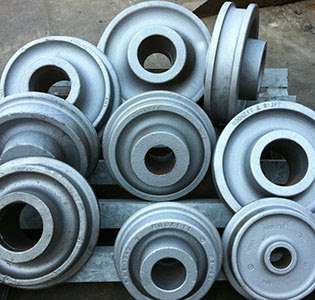
Wheel assemblies are another critical part of equipment reliability in ceramic manufacturing.
Kiln cars typically travel along rails, meaning their wheels must withstand repeated loading and movement. Wheel wear, alignment issues, or component damage can interfere with smooth operation and create maintenance challenges.
Properly engineered wheel assemblies can help support:
Consistent movement
Load distribution
Reduced mechanical stress
Reliable alignment
Longer component life
Depending on the application, manufacturers may require different wheel configurations, including flanged or flat-faced designs. Selecting the appropriate wheel and axle arrangement is an important part of developing a dependable kiln car system.
Material Selection Makes a Difference
The materials used in fabricated equipment have a direct impact on durability.
Steel is widely used for industrial fabrication because of its strength and versatility. However, different applications may call for different grades or configurations depending on load, temperature, corrosion exposure, wear, and other conditions.
For ceramic manufacturing equipment, material selection should consider the actual environment rather than simply choosing the strongest available material.
A properly selected material can help improve resistance to:
Mechanical stress
Wear
Heat exposure
Deformation
Impact
Corrosion
Combining suitable materials with sound engineering and fabrication practices can result in components that perform more reliably throughout their service life.
Precision Machining Supports Fabricated Components
Fabrication and machining often work together when producing industrial equipment.
A fabricated assembly may require accurately machined holes, shafts, mounting surfaces, wheel components, or other precision features. These features need to meet specified dimensions so that components fit correctly and operate as intended.
Custom machining can complement fabrication by producing precise components that integrate into larger assemblies. CNC turning, milling, drilling, and other machining processes can help achieve the dimensional accuracy required for industrial applications.
This combination of fabrication and machining can reduce the need to coordinate multiple suppliers for related manufacturing processes.
Better Fit for Existing Equipment
Ceramic manufacturers do not always need completely new equipment. In many cases, they need a replacement component or modified assembly that fits an existing production system.
This is where custom fabrication can be especially useful.
Replacement components can be developed according to existing drawings, measurements, samples, or engineering specifications. A fabricated component can be designed to integrate with equipment already installed in the facility.
This approach can help manufacturers address obsolete, worn, or difficult-to-source components without completely redesigning their production systems.
Reducing Unplanned Downtime
Unexpected equipment failures can be expensive in continuous manufacturing environments.
A failed component may stop material movement, interrupt kiln operations, delay production, and require emergency maintenance. Depending on the location and availability of replacement parts, repairs can take additional time.
Custom-fabricated components designed for the operating environment can help reduce the risk associated with premature wear and poor component fit.
Reliability does not eliminate maintenance requirements, but it can help make maintenance more predictable and reduce unnecessary interruptions.
Supporting Preventive Maintenance
Reliable equipment also makes preventive maintenance easier to manage.
When components are properly designed and manufactured, maintenance teams can establish inspection schedules based on expected operating conditions. Wear points, wheel assemblies, structural connections, and other components can be monitored before they become serious problems.
Custom equipment can also be designed with maintenance considerations in mind. Accessible components, replaceable wear parts, and practical assembly configurations can simplify future service work.
This can help shift maintenance from reactive repairs toward more planned and controlled activities.
Improving Long-Term Equipment Value
Industrial equipment represents a significant investment. Reliability therefore has an impact far beyond day-to-day production.
Equipment that lasts longer and requires fewer major repairs can provide better long-term value. Manufacturers can potentially reduce replacement costs, maintenance labor, and production interruptions.
Custom fabrication supports this objective by allowing components to be designed around actual operating requirements instead of forcing a production system to adapt to a generic product.
The result can be equipment that is better suited to the application and capable of providing dependable service over an extended period.
Quality Control Is Essential
Good engineering and material selection are important, but they must be supported by consistent quality control.
Fabricated components may involve cutting, forming, welding, machining, coating, and assembly. Each stage can affect the performance of the finished product.
Quality-focused manufacturing practices can help verify:
Dimensional accuracy
Weld quality
Material specifications
Component fit
Surface condition
Assembly accuracy
Overall workmanship
Consistent inspection throughout the manufacturing process helps identify potential issues before equipment reaches the production floor.
Custom Fabrication Can Support More Than Kiln Cars
Although kiln cars are an important example, ceramic manufacturers may require many other fabricated products and components.
Custom metal fabrication can support areas such as:
Material handling equipment
Structural assemblies
Wheel assemblies
Machine components
Equipment frames
Replacement parts
Custom brackets and supports
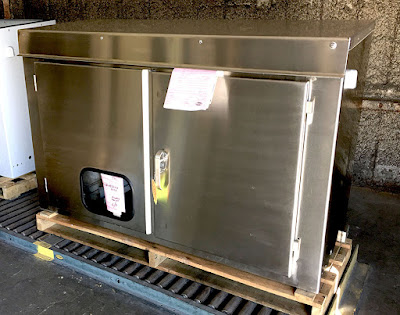
Industrial enclosures
This flexibility allows manufacturers to address individual equipment challenges while maintaining a consistent approach to engineering and manufacturing.
A Practical Approach to Equipment Reliability
Improving equipment reliability starts with understanding the conditions in which the equipment operates. Ceramic manufacturers should consider temperature, load, movement, wear, maintenance access, component compatibility, and expected service life when specifying fabricated equipment.
Working with an experienced manufacturing partner can also simplify the process. Engineering support, fabrication, machining, finishing, assembly, and quality control can be coordinated to create components that meet the requirements of the application.
Custom metal fabrication is not simply about producing a part that fits. It is about producing a component that is designed to perform within the environment where it will be used.
Building More Reliable Ceramic Manufacturing Equipment
Ceramic manufacturing requires equipment capable of handling demanding operating conditions for long periods. Custom metal fabrication can help manufacturers address these requirements through application-specific design, appropriate materials, precision manufacturing, and quality-focused production.
From kiln cars and wheel assemblies to custom structural components and replacement equipment, fabricated solutions can improve reliability while helping reduce maintenance challenges and unplanned downtime.
When engineering and manufacturing decisions are made with the actual production environment in mind, ceramic manufacturers can build equipment systems that provide dependable performance and long-term value.
Ceramic manufacturers in Mississippi looking for custom fabrication and manufacturing support can turn to Rockett Inc. at 3640 4th Street, Flowood, Mississippi 39232. With capabilities spanning engineering, machining, fabrication, welding, finishing, assembly, and shipping, the company can support demanding industrial equipment requirements from concept through completion.

Comments
Post a Comment