The Benefits of Combining Custom Machining with Metal Fabrication
Industrial manufacturing often requires components that meet specific dimensions, strength requirements, and performance standards. Many projects involve more than one manufacturing process to transform raw materials into finished products. Custom machining and metal fabrication are two important capabilities that work together to produce durable, precise, and application-specific industrial components.

Metal fabrication involves cutting, forming, rolling, and joining metal to create structures and assemblies. Custom machining uses specialized equipment, including CNC machines, to remove material and achieve accurate dimensions, shapes, and surface finishes. When these processes are coordinated, manufacturers can produce components that combine structural strength with precise engineering.
For industries such as power distribution, mining, material handling, brick manufacturing, and heavy equipment production, combining custom machining with metal fabrication can provide important operational advantages. It can also simplify production, improve quality control, and reduce the challenges associated with coordinating multiple manufacturing suppliers.
Understanding Custom Machining and Metal Fabrication
Although custom machining and metal fabrication are different processes, they serve complementary purposes.
Metal fabrication focuses on creating the basic structure or form of a component. Depending on the project, this may involve:
Laser and plasma cutting
Metal forming and bending
Plate rolling
Welding and joining
Structural assembly
Component preparation
Custom machining focuses on achieving the precise features required for a finished component. Common operations include:
CNC milling
CNC turning
Drilling and boring
Precision hole machining
Surface finishing
Dimensional adjustments
For example, a fabricated steel assembly may require accurately machined mounting holes, shafts, bearing surfaces, or connection points before it can be installed. Combining fabrication and machining allows these requirements to be addressed within a coordinated manufacturing process.
1. Improved Component Accuracy
Accuracy is essential when manufacturing industrial equipment and assemblies. Components must fit together correctly, align with related parts, and meet the dimensional requirements specified in engineering drawings.
Fabrication establishes the overall shape and structure of a component, while machining can refine critical surfaces and features.
This combination is particularly useful when producing parts that require:
Precise mounting locations
Accurate shaft dimensions
Bearing and bushing fits
Machined connection points
Consistent hole patterns
Specific surface finishes
For example, a fabricated equipment frame may require machined mounting surfaces to ensure that motors, bearings, or other mechanical components align correctly.
When machining and fabrication are coordinated, manufacturers can better control the relationship between structural dimensions and precision features.
2. Better Structural Strength and Performance
Fabricated metal components are often designed to withstand substantial mechanical loads, vibration, and demanding operating conditions.
Steel fabrication provides the structural foundation needed for many industrial applications. Machining then adds the precise features required for proper assembly and operation.
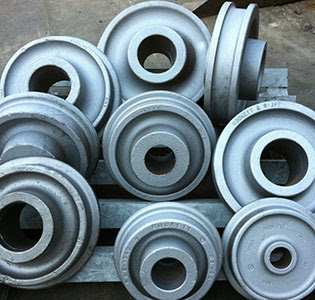
Consider a heavy-duty industrial wheel assembly. Fabrication may be used to produce supporting structures, brackets, or related components, while machining creates accurately sized bores, mounting features, and axle interfaces.
Each process contributes to the finished assembly's performance.
The important consideration is that machining operations must be planned carefully so they do not compromise the component's structural requirements. Material selection, fabrication methods, machining allowances, and inspection all play a role in achieving the desired result.
3. Greater Manufacturing Efficiency
Using separate suppliers for fabrication and machining can create additional coordination requirements. Components may need to move between facilities, undergo repeated handling, and pass through multiple production schedules.
Combining these capabilities within a coordinated manufacturing operation can simplify the workflow.
Potential benefits include:
Fewer production handoffs
Better scheduling coordination
Reduced material handling
Improved communication between manufacturing teams
Easier identification of production issues
More consistent project management
When fabrication and machining teams work together, they can plan operations in the correct sequence and address potential challenges earlier.
This can be especially valuable for custom industrial projects involving large components or multiple interconnected assemblies.
4. Greater Flexibility for Custom Manufacturing
Standard components do not always meet the requirements of specialized industrial equipment. Different manufacturers may need unique dimensions, mounting arrangements, structural configurations, or material specifications.
Combining custom machining with metal fabrication provides greater flexibility when producing application-specific parts.
Manufacturers can work from engineering drawings, samples, or project specifications to develop components that meet particular operational needs.
This approach supports applications such as:
Custom machinery frames
Industrial equipment supports
Material handling assemblies
Wheel and axle components
Electrical equipment structures
Replacement industrial parts
Specialized welded assemblies
The ability to fabricate a structure and machine its critical features creates more opportunities for custom manufacturing.
5. Improved Fit and Assembly
The performance of an industrial assembly depends on how well its individual components fit together.
Even a structurally sound fabricated component can create problems if its connection points, mounting surfaces, or alignment features do not meet the required dimensions.
Custom machining helps address these requirements by refining critical areas after fabrication.
For example, a welded assembly may require machining to correct or establish:
Flat mounting surfaces
Accurate bearing seats
Shaft openings
Threaded connections
Alignment features
Precision mating surfaces
These operations help components integrate more effectively with other parts of an industrial system.
The result is a more controlled assembly process and fewer problems caused by dimensional inconsistencies.
6. Better Quality Control Throughout Production
Quality control is important at every stage of industrial manufacturing. Fabrication and machining each introduce different variables that can influence the finished product.
Fabrication inspections may focus on weld quality, structural dimensions, material specifications, and assembly condition. Machining inspections may examine tolerances, surface finish, hole locations, and critical dimensions.
When both processes are coordinated, quality checks can be planned around the complete manufacturing sequence.
A typical workflow may include:
Reviewing engineering drawings and specifications.
Confirming material requirements.
Cutting and preparing raw materials.
Forming and fabricating structural components.
Completing welding and initial inspections.
Performing machining operations.
Checking critical dimensions and tolerances.
Completing finishing and final assembly inspections.
This structured approach helps identify potential problems before they affect later production stages.
7. More Efficient Material Utilization
Material selection and utilization influence both production efficiency and manufacturing costs.
Fabrication processes can prepare raw materials into shapes that closely match the required component design. Machining then removes additional material to create precise features.
Planning these operations together can help reduce unnecessary material removal.
For example, a manufacturer may fabricate a component close to its final shape before machining specific surfaces and connection points. This can be more practical than machining the entire component from a much larger block of material.
However, the best approach depends on component geometry, material properties, production volume, and dimensional requirements.
Proper manufacturing planning helps balance material utilization with the quality and performance requirements of the finished part.
8. Support for Demanding Industrial Applications
Many industrial sectors require components that combine structural durability with dimensional accuracy.
The integration of machining and fabrication is valuable across several applications.
Power Transmission and Distribution: Electrical equipment structures, transformer components, and fabricated assemblies may require precise mounting and connection features.
Brick and Ceramic Manufacturing: Kiln car structures, wheel assemblies, and related equipment may require fabricated steel components combined with accurately machined interfaces.
Mining and Material Handling: Heavy-duty equipment components must withstand repeated loads, movement, and demanding operating conditions.
Steelmaking and Industrial Manufacturing: Specialized equipment frames, supports, and mechanical assemblies often require both structural fabrication and precision machining.
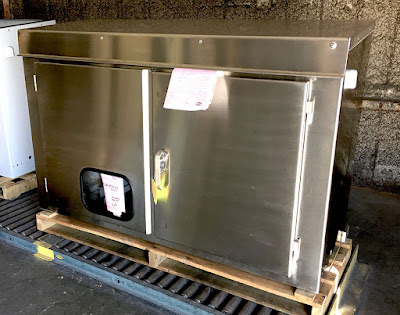
Utility Infrastructure: Custom-fabricated equipment and enclosures may require accurately machined openings, mounting points, and assembly features.
The combination of these capabilities allows manufacturers to address different requirements within a wide range of industrial projects.
9. Easier Coordination from Design to Finished Product
Manufacturing projects often involve several interconnected stages. Problems can occur when design decisions, fabrication requirements, and machining specifications are considered separately.
For example, a design may include a feature that is difficult to access after welding. If machining requirements are reviewed early, the manufacturing sequence can be planned to avoid unnecessary complications.
Engineering involvement helps establish:
Material specifications
Component dimensions
Fabrication requirements
Machining tolerances
Welding considerations
Assembly requirements
Finishing specifications
Coordinating these details before production begins can reduce avoidable rework and improve manufacturing consistency.
This is particularly important for custom projects where every component may have different specifications.
10. Long-Term Value for Industrial Buyers
Industrial buyers must consider more than the initial manufacturing price when evaluating suppliers and production methods.
Component accuracy, structural durability, maintenance requirements, assembly quality, and service life all contribute to the total value of a manufactured product.
Combining custom machining with metal fabrication can support these objectives by creating components that are designed and produced around their intended applications.
A coordinated manufacturing process may also simplify supplier communication, production planning, and quality management.
For OEMs, plant managers, engineers, and procurement teams, these advantages can make an integrated manufacturing partner a practical choice for complex industrial projects.
Choosing the Right Manufacturing Partner
Selecting a manufacturing partner requires evaluating more than individual equipment capabilities. Buyers should consider whether the manufacturer can understand project specifications, coordinate different processes, and maintain quality throughout production.
Important factors include:
Experience with industrial manufacturing projects
Engineering and design support
CNC machining capabilities
Fabrication and welding expertise
Material knowledge
Quality inspection procedures
Finishing and assembly capabilities
Shipping and project coordination
A manufacturer that can manage multiple stages of production may help simplify the process of turning engineering requirements into finished industrial components.
Conclusion
Combining custom machining with metal fabrication offers several advantages for industrial manufacturing. Fabrication provides structural strength and component geometry, while machining delivers the precision required for accurate fits, connections, and assembly.
Together, these processes can improve component accuracy, support equipment reliability, simplify production coordination, and provide greater flexibility for specialized manufacturing requirements.
For industrial companies producing heavy equipment, electrical components, material handling systems, and custom machinery, an integrated manufacturing approach can help deliver products that meet demanding performance and quality expectations.
If your industrial project requires coordinated custom machining and metal fabrication, Rockett Inc. provides full-service manufacturing support from engineering and machining to fabrication, welding, powder coating, assembly, and shipping. Located at 3640 4th Street, Flowood, Mississippi 39232, the company supports industrial buyers and OEM manufacturers with custom manufacturing solutions. Visit our Website to learn more about our capabilities and manufacturing services.
Comments
Post a Comment